What Filipino players actually mean by casino games
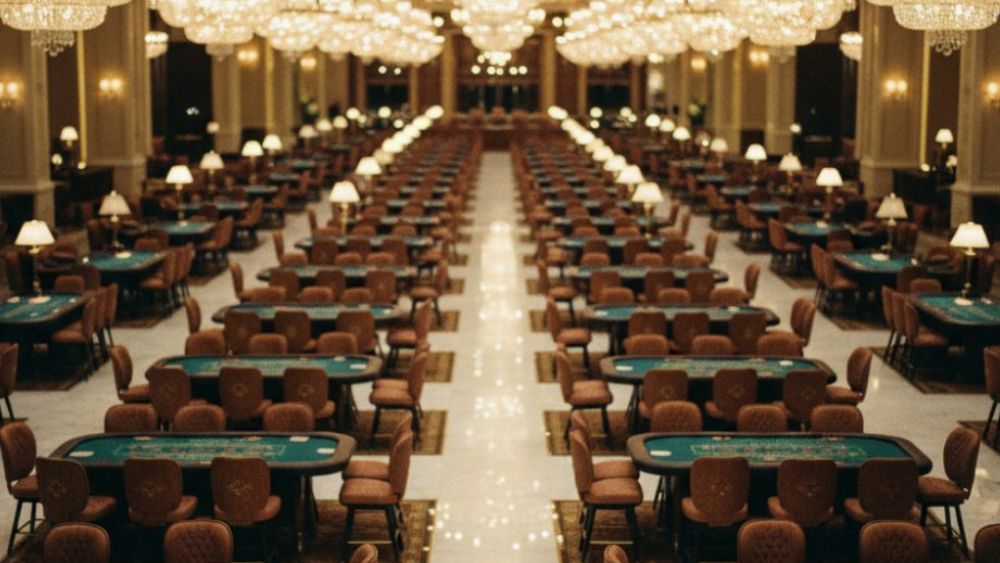
Walk into any licensed casino in Metro Manila or Cebu and the phrase covers a wider spread than most players expect: baccarat and pontoon on the main floor, hundreds of slot machines in the back, electronic table terminals in the smoking lounge, and a sportsbook counter near the entrance. The 2026 floor mix at most Entertainment City properties runs roughly 55% slots, 30% table games, and the rest split between electronic tables and specialty product.
Understanding the difference matters because each category pays the house at a different rate and at a different speed. A 0.5% edge game played 60 hands an hour is expensive. A 1.4% edge game played 20 hands an hour is often cheaper in real pesos. That is the first thing any floor supervisor will tell you, and it is the thing the brochure never does.
The second distinction is licence. Under PAGCOR's integrated resort framework, every property operating table games in 2026 holds a Casino Gaming Licence, and the regulator publishes the licence number on the cage signage and the gaming floor permit. If you are playing online rather than on the floor, look for a PAGCOR-issued licence number issued under the PIGO regime — the format is PAGCOR-PIGO followed by a six-digit registry number. Reputable operators print it in the footer, not in a pop-up.
Table games: where the real edges live
If you only remember one number from this article, make it the banker bet in baccarat. At an eight-deck table with the standard 5% commission, the house edge sits at 1.06%. The player bet is 1.24% and the tie bet is 14.36%. Most Philippine casinos deal eight decks, cut a commission of 5% on banker wins, and offer an EZ Baccarat variant with no commission but a push on banker wins of 7 — the house edge on banker comes out at 1.02%, which is the best number on the floor.
Pontoon and blackjack sit between 0.5% and 1.5% depending on rules. A six-deck shoe paying 3:2 on blackjack with dealer standing on soft 17 and double-after-split allowed is the configuration worth hunting. If the table pays 6:5 instead of 3:2, walk — the edge jumps from about 0.4% to 1.8% and no amount of perfect basic strategy recovers it.
Craps is thin in the Philippines but the major resorts carry it. Pass line with single odds runs about 0.85% and pass line with double odds drops to 0.61%. The propositions in the middle of the layout — hardways, yo, horn — run from 5.5% to 16.6% and are where the casino makes its money on that pit.
Roulette is the clearest split. Single-zero European wheels carry a 2.7% edge. Double-zero American wheels are 5.26%. In 2026 the single-zero tables in Entertainment City carry a higher minimum, usually P1,000 against P500 on the double-zero wheels, and the math still favours paying the higher minimum.
Slots and electronic games: volatility is the real variable
Slots do not have a single edge. They have a range. A typical Philippine floor machine in 2026 is set to 88% to 94% return to player, which is an edge of 6% to 12% per spin, and the difference between those two numbers over 500 spins is a weekend's bankroll. Return-to-player is not the only variable. Volatility decides whether you will see that return at all.
Low-volatility machines pay small amounts often and suit a P2,000 session over three hours. High-volatility machines can eat P10,000 before paying anything, and then pay a 2,000x jackpot. Neither is better. They suit different bankrolls and different tolerances.
Electronic table games deserve a mention because they are the fastest-growing category on Philippine floors. These are terminals linked to a live dealer or a random number generator, with minimums from P50 to P200 and a much faster decision cycle. The house edge matches the live version, but the turnover is higher — often 80 to 100 decisions per hour — so the expected loss per hour climbs even when the percentage does not. A 1.06% baccarat game played at 100 hands an hour on P200 a hand costs about P212 an hour in expectation. The same game at 30 hands an hour costs P64.
Speed is a cost. Every game on the floor has an edge measured per bet, not per hour, and the clock turns that percentage into pesos.
Bonuses, comps, and the maths behind them
The comp system on Philippine floors is tiered and readable once you know the thresholds. Most properties run a four- or five-tier card programme with entry at the base tier, mid-tier at roughly 50,000 points, and top-tier at 500,000 points or a rolling 90-day play requirement. Points accumulate at about one point per P100 wagered on slots and one point per P200 on tables, and 100 points typically redeem at P1 in free play.
Sign-up bonuses are where players misjudge the value. A 100% match up to P5,000 with a 20x wagering requirement means P100,000 of turnover before withdrawal. On a 94% return slot, the expected cost of clearing that bonus is P6,000 — more than the bonus. Bonus terms of 30x or more on slots are almost never worth clearing unless you intended to play that volume anyway. A 10x requirement on a low-edge blackjack contribution is a different proposition entirely.
Cash-out speed matters as much as the headline offer. Cage payouts for verified accounts at major Philippine resorts clear in 15 to 30 minutes for cash and same-day for bank transfer up to P500,000. Online operators with PIGO licences typically process e-wallet withdrawals in 1 to 4 hours and bank transfers in 1 to 2 business days. If a site quotes 5 to 7 days, that is a warning sign, not a policy.
How to pick a game for the night you actually have
Start with the bankroll and the clock, not the game. If you have P5,000 and four hours, the decision is about turnover, not jackpots. Divide the bankroll by the number of hours and you have an hourly budget. Then pick a bet size where 100 to 200 bets fit inside that hourly budget — that is your survival window.
From there the choices narrow fast. Baccarat banker, single-zero roulette on the outside, blackjack with 3:2 and favourable rules, and low-volatility slots at 60 to 120 spins an hour are the four most efficient ways to spend a session. The specialty games and the side bets are entertainment priced accordingly. There is nothing wrong with that as long as it is a deliberate choice and not an accident.
Finally, set the stop-loss before you sit down and set the win target too. A player who leaves at plus 30% of buy-in once a session exits more sessions ahead than one who chases. That is not a strategy that beats the house edge — nothing does over the long run. It is bankroll management, and on a Philippine floor where a P500 minimum table can turn over P20,000 in an evening, it is the only variable you fully control.